What to wear in Johnston Canyon in winter
A winter walk in Johnston Canyon means a few hours outdoors in the shade of a gorge, mostly on the move, with pauses at the falls where the cold catches up with you. Dress for those pauses and the walk is a pleasure. Below, the kit layer by layer, plus what the tours give you on the day.
How cold the canyon gets
Winter in Banff is long, and in midwinter daytime highs often sit around −5 °C (23 °F). Johnston Canyon feels colder than town, because the low sun barely reaches the bottom of the gorge.
Cold snaps can push the temperature far lower for days at a time, while a chinook wind can bring a brief thaw. Check the forecast the evening before, and pack one layer more than you think you need.
The walk itself warms you up. The trail to the Upper Falls climbs about 135 m (440 ft), so you will sweat on the way up and then cool fast while you stand at the viewpoints.
Layers from the skin out
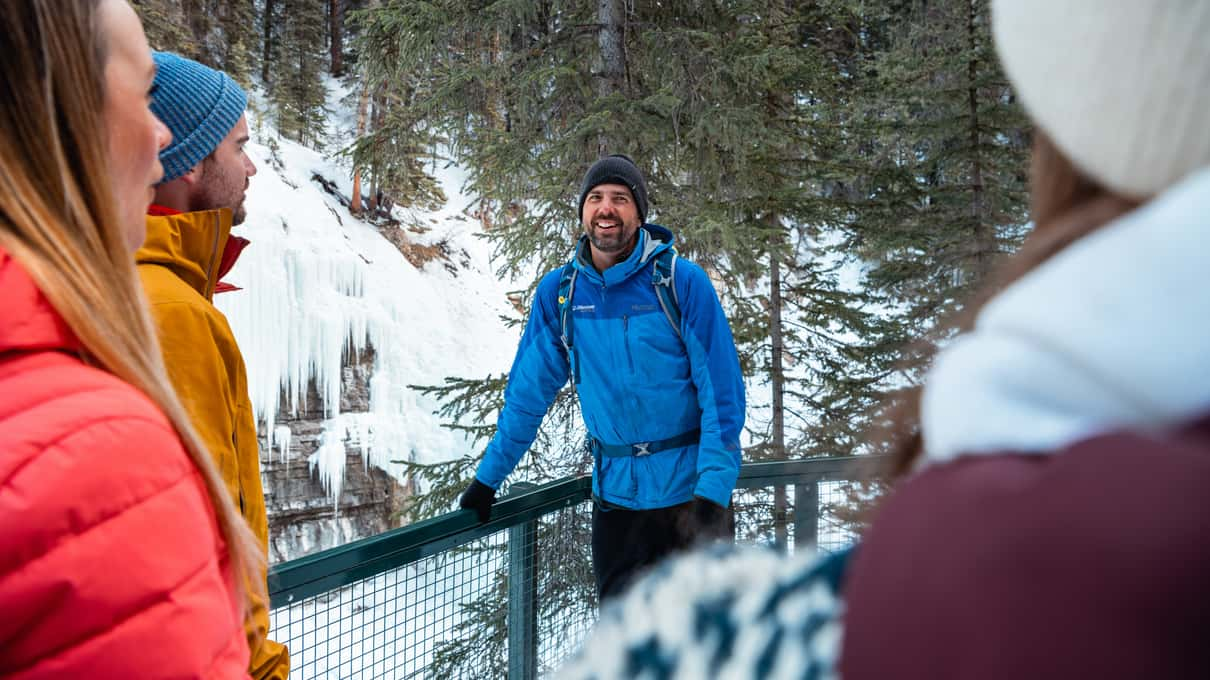
Discover Banff asks its icewalk guests to dress in ski wear and warm boots, topped off with a hat and mittens. That is a good starting point for any tour, and layers let you adjust as you climb and stop.
- Base layer of merino wool or synthetic long underwear for top and bottom (cotton holds sweat and then chills you)
- Mid layer of fleece or a light down sweater
- Insulated jacket with a hood, ideally one that blocks the wind
- Ski or snow trousers, or insulated trousers over your base layer
- A buff or neck gaiter that you can pull over your nose
Jeans are a poor choice on their own. They let the cold straight through and stay chilly once snow melts into them.
Pick a mid layer you can open at the neck. On the climb to the Upper Falls you will want to vent heat, and at the top you will want to close everything again before the sweat turns cold.
Boots that work with ice cleats
Your feet matter most. Wear insulated, waterproof winter boots with a firm sole over wool socks. Leave trainers and thin-soled fashion boots at home.
The ice cleats strap over your own boots, and the guide on the Discover Banff icewalks shows you how to fit them. A boot with a defined heel and a stiff sole holds the cleats in place far better than a soft shoe.
Pack a spare pair of socks in your bag. If snow gets into a boot at the trailhead, dry socks for the bus ride back make the end of the day much more comfortable.
Hands and head, plus sunglasses
Mittens keep fingers warmer than gloves, because the fingers share their heat. Wear thin liner gloves underneath, so you can pull off the mittens for a photo without baring your skin to the cold.
A warm hat that covers your ears is a must, and a buff protects your face on the colder stretches. On a sunny day bring sunglasses as well, because the glare off fresh snow on the trail is stronger than you expect.
What the tours hand out
You do not need to buy traction gear for a guided walk. Each tour on this site that visits the frozen canyon lends you something for your feet, and two add a pole.
| Tour | Gear provided | Length | From |
|---|---|---|---|
| Discover Banff day icewalk | Ice cleats, hiking pole | About 4 hours | ~$78 |
| Discover Banff evening icewalk | Ice cleats, hiking pole, souvenir headlamp | About 2.5 hours | ~$78 |
| Rockies Journey day tour (winter) | Crampons | About 10 hours | ~$58 |
On the day icewalk from ~$78 and the evening icewalk from ~$78 hot chocolate and maple cookies help too. Going without a guide means bringing your own cleats or microspikes, as our page on Johnston Canyon without a tour explains.
Dressing for a long day out
A full-day tour asks more of your clothes than a short walk. You climb in and out of a warm minibus many times, so a jacket that is easy to unzip beats one heavy coat you have to wrestle with.
One winter day, many stops
Rockies Journey's small-group day tour runs about 10 hours from ~$58 and picks up in Banff as well as Canmore and Calgary. In winter it walks Johnston Canyon to the frozen falls with crampons included, then stops at Lake Louise and Emerald Lake. It holds 4.9 from 100+ reviews on GetYourGuide.
Johnston is one stop of many on that day, so the canyon gets limited time. Carry snacks and a refillable bottle on top of the bottled water. The order of the stops is laid out in Johnston Canyon and Lake Louise in one day.
Phones and cameras in the cold
Cold drains batteries fast, and a phone at half charge can shut down at the first frozen fall. Keep it in an inside pocket close to your body and take it out only for the shot.
Shooting through mittens is clumsy, so set the camera before you take your hands out. A phone grip or a wrist strap helps too, because a phone dropped over the railing is gone for good.
A small power bank with a short cable earns its place in the bag. When you come back into the warm bus, leave a camera in its case for a while, so condensation does not form on the lens.
Summer clothes for the canyon
In summer the canyon is cool and damp rather than icy. Mist from the falls settles on the catwalks, and mornings in the valley can be chilly even in July.
Wear layers you can tie around your waist and a light rain shell. The e-bike and hike tour from ~$143 requires closed-toe shoes, so sandals stay at the hotel.
Our guide to Johnston Canyon by e-bike covers the ride itself. Dressing children for the cold follows the same rules with extra spares, as our family page explains.