Johnston Canyon on your own from Banff
You do not need a tour to walk Johnston Canyon. A car and a park pass get you to the trailhead, and in winter a pair of ice cleats gets you safely to both falls. Below, what doing it yourself takes, and what a guided walk adds for the money.
The drive from Banff
Johnston Canyon sits about 25 km (15 mi) west of Banff on the Bow Valley Parkway, also called Highway 1A. The drive takes about 30 minutes.
The parkway is a slower, quieter road than the Trans-Canada Highway beside it, and wildlife is sometimes near the verges. Drive it at the posted speed and watch the shoulders closely at dawn and dusk.
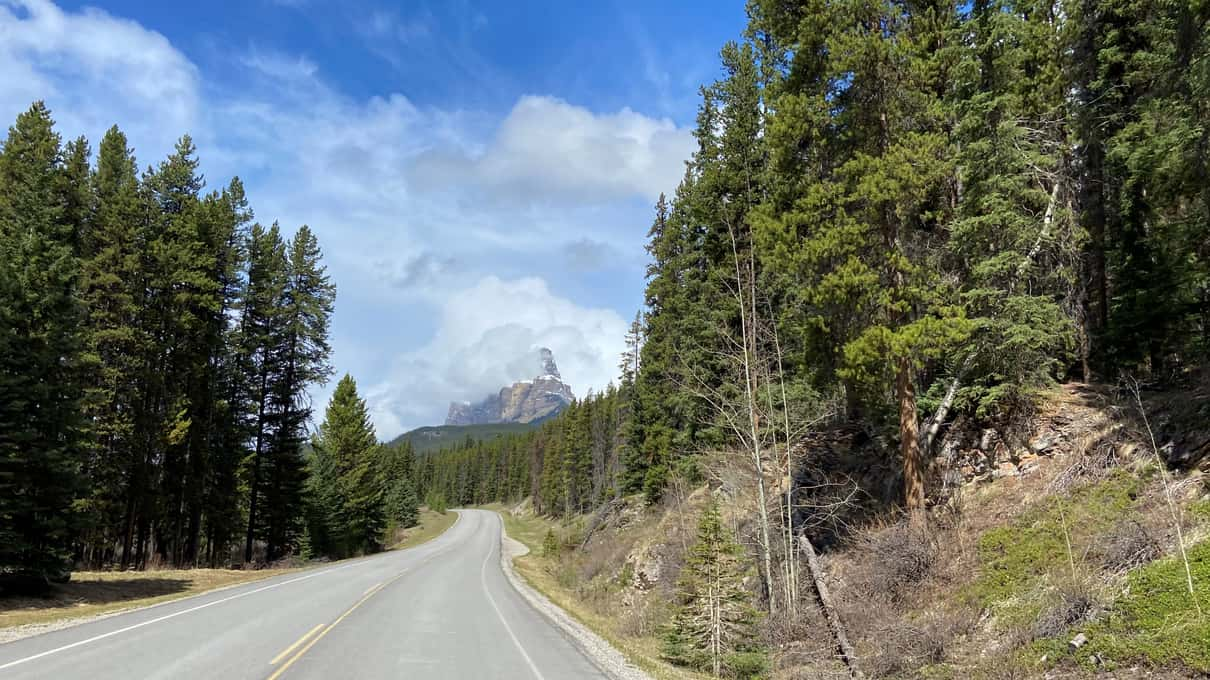
In winter, the parkway gets less clearing than the main highway. Fresh snow or black ice can slow the drive, and a car with winter tires makes a real difference.
Bring snacks and a hot drink from Banff. Services along the parkway are few, and in winter you should not count on finding anything open near the trailhead.
The park pass
You need a Parks Canada park pass to stop anywhere in Banff National Park, and the canyon parking lot counts. Buy a day pass per visit, or an annual pass if you plan a longer stay in the Rockies.
Passes are sold online and at the park gates and visitor centres. Check Parks Canada's current prices before you go, since they change from time to time.
Parking at the trailhead
The parking lot at Johnston Canyon fills early on busy days, in summer above all. Late arrivals can end up circling or giving up.
Arriving early in the morning gives you the best chance of a space and a quieter canyon. Spaces open up again later in the afternoon as cars start to leave.
If the lot is full, come back later rather than waiting in the lane. In winter a mid-afternoon arrival often finds spaces, though the short daylight then leaves less time on the trail.
Do not park on the parkway shoulder where signs forbid it. A ticket or a tow from the middle of the national park is an expensive way to end a walk.
The summer bus
In recent summers a seasonal Roam Transit bus has run from Banff to Johnston Canyon. It saves the parking hunt and costs much less than a tour.
Routes and timetables change from year to year, so check the current Roam schedule before you plan around it. A car or a tour is the realistic way in during winter.
The bus also spares you the drive back after a long day, and it runs along the same parkway, so you still see the valley on the way.
The spring travel restriction
Part of the Bow Valley Parkway near Johnston Canyon has a seasonal travel restriction in spring, overnight, to give wildlife room to move. It runs roughly from March to late June.
The exact dates and hours can change, so check Parks Canada's current rules before a dawn or night visit. The other changes through the year are on our month-by-month page for Johnston Canyon.
Winter on your own needs cleats
From roughly December to March the catwalks and steps turn to packed snow and ice. Ordinary boots slide, and falls on the steel grates hurt.
Bring your own ice cleats or microspikes that strap over winter boots. Outdoor shops in Banff usually stock them; the guided tours hand them out with the fare.
A hiking pole helps on the steeper stretches toward the Upper Falls. The trail stays open in winter, but the creek ice does not count as part of it, so stay on the catwalks and the path.
Check the Parks Canada trail report before you set out. After heavy snow or a chinook thaw, the path can change from one day to the next.
Cold hands end more self-guided walks than ice does. Our list of what to wear for the icewalk covers boots and layers from the skin out.
What a guide adds
A tour takes the drive and the parking off your hands, and in winter it brings the cleats and a pole. Discover Banff's day icewalk from ~$78 also brings hot chocolate and maple cookies.
The guide adds the stories. How the creek cut the gorge and how the ice builds up each winter are the parts most self-guided walkers miss.
There is safety in it too. A guide knows where the ice is worst on the day and when to turn the group around.
Whether that suits you depends on how you travel. What each fare includes is in our price comparison of the tours. The trail itself, stretch by stretch, is the subject of our Lower and Upper Falls guide.
A guided summer alternative to driving
In summer White Mountain Adventures' e-bike and hike at ~$143 swaps the car for an electric bike. You ride from Banff past Vermilion Lakes and along the Legacy Trail, then up the parkway to the canyon.
A guide leads the hike to the Lower Falls bridge, and a one-way vehicle shuttle means you only ride one direction. It holds 4.8 from 240+ reviews on Viator; the catch is the price and the summer-only season.
Leave the car in Banff for a summer day
White Mountain's 4-hour e-bike and hike rides the parkway to Johnston Canyon. The fare covers bike and helmet plus the guide and the shuttle.
Our guide to the e-bike tour follows the ride in detail. For a winter evening without a car, the page on the day and evening icewalks compares the two guided options.